

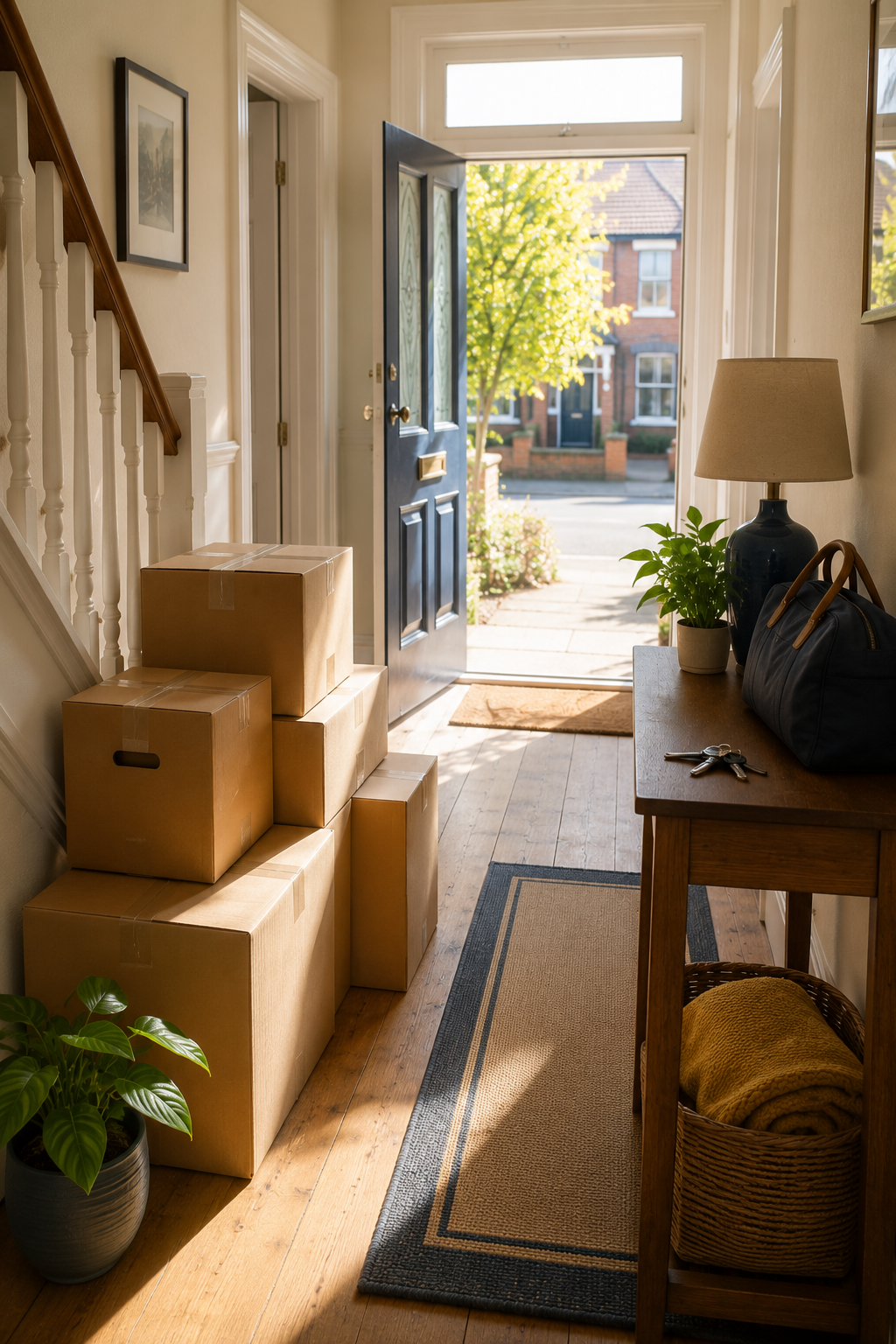
A man and van booking is a simple thing, and it stays simple if a few small preparations are done beforehand.
None of this takes long. It’s just the difference between a move that takes an hour and one that takes three.
The week before
Confirm the details. Both addresses with postcodes, the date, the arrival window, and a mobile number for each end. If someone else is receiving at the other end, make sure your mover has their name and number.
Describe the job accurately. This is the important one. Tell them:
- What you’re moving, honestly — including the things in the loft you’re pretending don’t exist
- Any heavy or awkward items
- Which floor you’re on, and whether there’s a lift
- What the parking is like at both ends
Nobody’s judging the stairs. They just need to bring the right van and the right number of people.
Sort parking if your street has restrictions.
The day before
Finish the packing. All of it. “Nearly packed” is the most common cause of a slow, stressful morning.
Seal and label boxes with the room they’re going to. Write on the side, not just the top.
Dismantle what needs dismantling — beds, table legs, anything that won’t fit through a door assembled. Bag the screws and tape them to the item.
Empty drawers and cupboards. Furniture travels safer and lighter empty, and loaded drawers slide open at the worst moments.
Defrost the freezer if it’s coming with you. A day is usually enough, and a wet freezer is nobody’s idea of fun.
Charge your phone. Obvious, and yet.
The morning of
Clear the route. Hallway, stairs, path, doorway. Anything that isn’t coming should be out of the way of everything that is.
Stack boxes near the door, grouped by room. Loading is far quicker when everything is together rather than scattered through the house.
Put aside what’s travelling with you — documents, keys, jewellery, medication, laptop, chargers. Keep these separate and clearly out of the loading area, or they’ll get loaded.
Set aside the essentials box — kettle, mugs, tea, toilet roll, a towel. That one goes in the car.
Keep pets and small children somewhere safe. Doors are propped open and heavy things are moving. A closed room, or a friend’s house for the day, makes everything easier.
When they arrive
Show them round briefly — what’s going, what’s staying, anything fragile, and where things go at the other end.
Point out anything that needs particular care. It takes a minute and it’s the best minute you’ll spend all day.
Then, genuinely: let them get on with it. The most helpful thing you can do while a van is being loaded is stay out of the doorway and put the kettle on.
At the other end
Have someone there to say where things go. “Kitchen” on a box only helps if someone knows which room is the kitchen.
Check the van is empty before it leaves — a quick look, including under blankets. Things occasionally hide.
If plans change
Let your mover know as early as you can. Dates slip, chains wobble, keys arrive late — it happens constantly and it’s much easier to rearrange with notice than on the morning.
FAQ
How should I prepare for a man and van? Finish packing the day before, label boxes by destination room, dismantle furniture that won’t fit through doors, clear the route, and sort parking at both ends.
Do I need to help carry things? No. The crew does the lifting and loading. The most useful thing you can do is have everything packed, accessible and ready to go.
What should I keep with me rather than in the van? Documents, keys, jewellery, medication, chargers, and anything irreplaceable — plus an essentials box with kettle, mugs and toilet roll.